
Make It Make Sense: The Ultimate Guide to Third-Party Network Transactions (1099-K Without the Panic Attack)
Confused by Third-Party Network Transactions? This guide explains 1099-K rules, thresholds, reporting, and how to avoid IRS surprises.
👋 Welcome to the Financial Surveillance State—Population: You
Remember when splitting a pizza meant actual cash? When PayPal was just for your eccentric eBay aunt? Those days are deader than the “Poke” feature on Facebook. Welcome to the era where every digital dollar you send or receive triggers a tiny IRS alert—a financially invasive ping in a government server somewhere. If you’ve ever sold a vintage lamp on Marketplace, freelanced, or even used a business profile to reimburse a friend for tickets, you’re now a star in the Third-Party Network Transaction show. And the director just sent you a form called the 1099-K.
Let’s make this whole chaotic system make sense. No jargon, no panic—just clarity, a few laughs, and links to save your sanity.
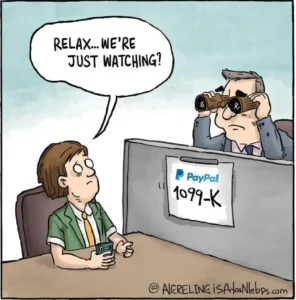
🔍 What Is a Third-Party Network Transaction? Meet the Digital Middleman 🤖
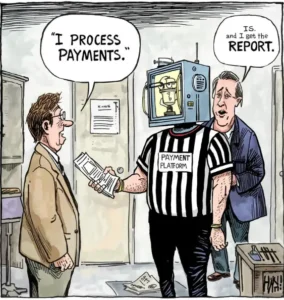
A Third-Party Network Transaction occurs anytime money moves between two parties via a platform that isn’t a direct bank. Think of it as a financially savvy, fee-charging friend who handles the money for a group gift—except this friend has a direct line to the IRS.
The Core Services of This Digital Middleman:
- Settlement: Completing the transaction securely.
- Processing: Doing the digital heavy lifting.
- Reporting: Snitching on your financial activity to the taxman via Form 1099-K.
Your Third-Party Transaction Network Hall of Fame:
- The OGs: PayPal, Stripe, Square
- The Social Spendables: Venmo (Business), Cash App (Business)
- The Marketplace Maestros: Etsy Payments, Shopify Payments, eBay Managed Payments
- The Gig Giants: Airbnb, Uber (when they process the payment)
External Resource: The IRS provides a thrilling read on Payment Card and Third Party Network Transactions. It’s a real page-turner if you enjoy reading government publications for fun.
📈 The Lifecycle of a Single Third-Party Network Transaction: A Drama in Five Acts
Let’s follow a single transaction—”The Sale of a Questionably ‘Vintage’ Knit Sweater”—from click to IRS track.
Act I: The Spark
Buyer clicks “Buy It Now.” The Third-Party Network Transaction is initiated! Hope (and anxiety) blooms.
Act II: The Handoff
The $50 payment enters Etsy Payments. The money has left the buyer but hasn’t reached you. It’s in transaction limbo—a digital purgatory where fees are calculated.
Act III: The Processing
Etsy verifies the payment, holds funds, and deducts fees. The transaction is being “processed,” which is corporate-speak for “making sure this isn’t a stolen card buying your ugly sweater.”
Act IV: The Settlement
$46.75 lands in your bank. The monetary Third-Party Network Transaction is complete! The emotional transaction of wondering if you priced it right lingers forever.
Act V: The Paper Trail
Etsy logs the $50 transaction. At year’s end, this data may become a line on Form 1099-K. The transaction is immortalized in tax history.
🔢 The 1099-K Rules That Actually Matter (The Threshold Tango)
Here’s where the IRS officially enters your Venmo DMs. The rules are changing fast.
| Tax Year | Reporting Threshold | Transaction Count | What This Means (In Plain English) |
|---|---|---|---|
| 2024 | $20,000 | 200+ | The “Don’t Sweat It” Zone. The old rule most casual sellers ignored. |
| 2025 | $2,500 | None | The Side Hustle Spotlight. Your platform sales are now on the IRS radar. |
| 2026 | $600 | 1+ transaction | The “Everyone’s Included!” Era. More transactions get reported. |
🧠 Make it make sense takeaway:
If money moved through PayPal, Venmo, Cash App, Stripe, Square, Etsy, or Shopify, the IRS sees it. This isn’t a prediction—it’s the new reality of the Third-Party Network Transaction. The threshold isn’t dropping; it’s plummeting. Every single transaction over $600 will soon have a paper trail with your name on it.
🧠 Why This Table Matters: The Great Transaction Misunderstanding
Let’s translate from “Tax Code” to “Human.”
🧑💼 Business Owner Logic:
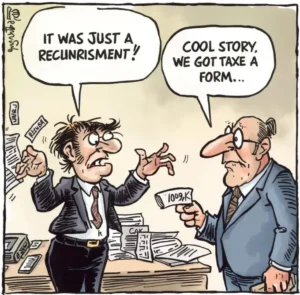
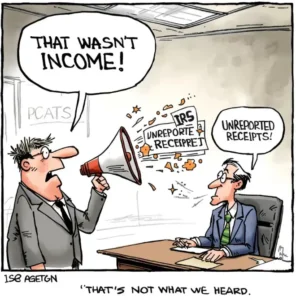
“That wasn’t income! It was a reimbursement! A gift! A refund! Just money passing through!”
🏛️ IRS Logic:
“Cool story. We got a form.”
Here’s the brutal truth: Form 1099-K reports gross payments processed, not profit. It doesn’t care about:
- Your actual profit
- Your refunds
- The fees the platform took
- The sales tax you collected
- Whether it was “just passing through”
The IRS sees the gross Third-Party Network Transaction amount. You must tell the rest of the story.
📑 Where the IRS Expects Your Third-Party Network Transaction to Show Up
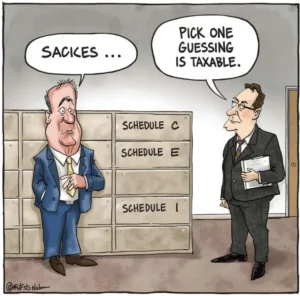
You got a 1099-K. Now what? You can’t ignore it (tempting). Here’s where that transaction data belongs on your return:
| Situation | Where It’s Reported |
|---|---|
| Business / Side Hustle | Schedule C (Profit or Loss from Business) |
| Rental Activity | Schedule E (Supplemental Income and Loss) |
| Hobby Income | Schedule 1 (Additional Income and Adjustments) |
| Personal Reimbursements | Reconciled (Not taxable, but must be documented) |
| Selling Personal Items at a Loss | Not Taxable (But must be reconciled & explained) |
A 1099-K doesn’t mean you owe tax—it means you owe an explanation. The form is the starting line. Your job is to move that number from “gross receipts” to “taxable income” by subtracting, well, everything else.
External Resource: The AICPA’s Guide to Form 1099-K explains this with fewer tears than figuring it out alone at midnight.
🚩 The Trap: What You Say vs. What the IRS Hears
This is where smart people get tripped up. Our internal monologue doesn’t translate to IRS-speak.
| You Say | The IRS Hears |
|---|---|
| “That wasn’t income!” | “Unreported receipts.” |
| “Venmo is for personal stuff!” | “Third-Party Network Transaction.” |
| “I already paid tax on that!” | “Show us where.” |
| “That includes refunds!” | “Prove it.” |
| “It was just money passing through!” | “We see a transaction. Explain it.” |
Every Third-Party Network Transaction is presumed guilty until proven innocent. The burden of proof is on you. Your Venmo feed is no longer casual—it’s a potential audit trigger.
💡 The Great Transaction Reality Check: Gross vs. Net
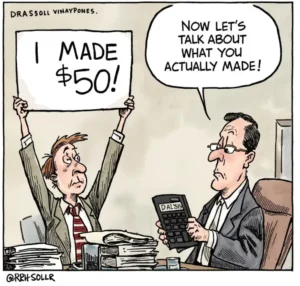
This is the most crucial math lesson you’ll get. Your 1099-K shows gross Third-Party Network Transaction amounts. The IRS taxes net income.
The Ugly Sweater Transaction Saga:
- Gross Transaction (on 1099-K): $50
- Minus Etsy’s Fee: –$3.25
- Minus Shipping You Paid: –$8.50
- Minus Yarn Cost: –$12.00
- Minus “Creative Frustration” Coffee: –$5.75 (legit business expense!)
- Taxable Income From This Transaction: $20.50
See? The transaction report shows $50, but the taxable reality is less than half. This is why tracking every related expense transaction is non-negotiable.
Deductible Transaction Types:
- Platform fee transactions (PayPal’s cut)
- Supply purchase transactions (yarn, fabric, weird beads)
- Home office transactions (that sweater-making corner counts!)
- Marketing transactions (Facebook ads for your knitwear empire)
“Business Education” transactions (that YouTube tutorial on cabling)
🛡️ How to Get Ahead of the Transaction Tsunami: Your Survival Kit
- The Separation Principle
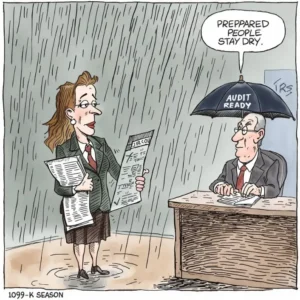
Create dedicated business profiles on Venmo/PayPal/Cash App. Use a separate business bank account. Mingling funds is like giving the IRS a highlight reel of your financial chaos. This is survival, not just good practice.
- The Documentation Dance
For every Third-Party Network Transaction that could end up on a 1099-K, you need a backup story:
- Sale? What sold? What did it cost you?
- Reimbursement? What for? Where’s the receipt?
- Refund? What was the original transaction ID?
A simple spreadsheet with Date, Platform, Amount, Type, Notes will save you hours of panic.
- Master the New Math
- Old Math: Gross Sales – Expenses = Profit.
- New Math (Post-1099-K): Gross Transactions (per 1099-K) – Everything That Wasn’t Profit = Taxable Income.
Become a master of the second equation. “Everything” includes fees, cost of goods, shipping, home office deductions, and even the portion of your phone bill used for business.
External Resource: Apps like QuickBooks Self-Employed are built for this transaction-tracking nightmare and can categorize tricky Venmo transactions.
- The Quarterly Tax Tango
No one withholds taxes from these transactions. Set aside 25-30% of your Third-Party Network Transaction income in a separate “For The IRS” account. Make estimated quarterly payments. Future you will be eternally grateful.
🔮 The Future Is $600: What’s Next for Third-Party Network Transactions
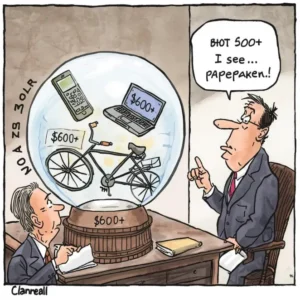
By 2026, the $600 rule is the law. This means:
- Selling your old iPhone for $650? Reportable transaction.
- Making $700 from freelance design? Reportable transaction.
- Renting your parking spot for $50/month? Over a year, that’s $600. Reportable.
The era of “flying under the radar” is over. The new era is about documentation, explanation, and smart transaction management.
Trends to Watch:
- Crypto Transactions: That NFT sale may soon get the same 1099-K treatment.
- Global Tracking: Cross-border sales mean more countries sharing transaction data.
- Real-Time Reporting: More frequent reporting from platforms = more paperwork for you.
The bottom line: Every digital Third-Party Network Transaction leaves a paper trail. The systems are getting smarter. You need to get smarter about your transactions.
🧾 Now Does it Make It Make Sense Style

The IRS doesn’t tax apps. They tax unexplained money.
Your PayPal balance isn’t the issue. The unexplained Third-Party Network Transaction inside it is.
If your books don’t tell the story, the IRS will write one for you—and they’re terrible authors. Their version usually ends with you owing money, plus penalties, plus interest.
So start narrating. Track every Third-Party Network Transaction. Document its purpose. Separate business from personal. Because in today’s digital economy, every transaction is a sentence in your tax story.
Make sure you’re the one holding the pen
If Third-Party Network Transactions are running through your PayPal, Venmo, Etsy, Stripe, or Cash App, the IRS already has the first draft of your tax story.
Your job is to make sure it’s accurate.
Before filing season — or before the next 1099-K lands — take time to:
-
Separate business and personal transactions
-
Reconcile 1099-K totals to actual income
-
Document reimbursements, refunds, and platform fees
-
Fix misclassified activity before it becomes an IRS question
A 1099-K isn’t a verdict.
It’s a starting point.
If your transactions feel messy, unclear, or “just passing through,” Aven Consulting Group helps business owners and side hustlers reconcile 1099-Ks, clean up books, and make sure the numbers tell the right story — without panic or guesswork.
Aven Consulting Group
📞 (954) 821-2800
📧 moc.tlusnocneva@ofni
🌐 www.avenconsult.com
Make it make sense — on your terms.