
But I Have to Turn a Profit to Pay Taxes, Right? 🤦♂️
Understanding the Real Rules Behind Business Profit and Taxes
By Fred R. Venerin – 12/9/2025

Business owner: “I didn’t make a profit this year, so I shouldn’t owe taxes.”
Accountant: And every time, I slowly remove my glasses, look into the distance like I’m in a dramatic IRS documentary, and whisper: “🤦♂️”
The truth is, the IRS doesn’t care about your “profit.” They care about rules, definitions, and whether your “business expense” was actually a business expense… or just your emotional support DoorDash. Let’s break this down before the IRS breaks you down.
The Big Misunderstanding: Profit Has Feelings. Taxes Don’t.
Most business owners think their taxes hinge on one magical number: Profit.
But here’s the IRS translation:
“We will allow you to deduct expenses… IF they meet our definition of:
✔ Ordinary
✔ Necessary
✔ Incurred in business
✔ Documented
✔ Logical
✔ And, preferably, not written in crayon.”
This definition comes from IRC §162, which determines whether an expense is a legitimate business deduction—or just a polite suggestion.
And if your expenses don’t qualify under §162, the IRS adds them back. Back into income. Back into profit. Back into “Hello, tax bill.”
This is why someone can be broke in real life but profitable on paper—a magical IRS trick. Kind of like a tax-season ghost story.
Quick Refresher: Decoding IRC §162
Let’s break down what really counts under §162 when it comes to business expenses:
✔ Ordinary
The expense should be standard practice in your industry. If your colleagues wouldn’t claim it, you probably shouldn’t either—don’t be the odd one out.
✔ Necessary
The cost has to be genuinely useful to your business—not just something that makes your workday more enjoyable (sorry, that doesn’t count).
✔ Paid or Incurred
You must have actually spent the money or be legally committed to pay it.
✔ Tied to a Real Business
The expense must relate to an actual business, not a hobby, a wishful side project, or something you’re planning to start “soon.”
What happens if your expense doesn’t tick all those boxes?
🚫 You can’t deduct it.
🚫 Your taxable income stays the same.
🚫 Your tax bill doesn’t shrink.
In other words, not following these rules is basically asking for a facepalm from the IRS.
The IRS Doesn’t Care If You FEEL Like You Didn’t Profit
You can owe taxes even when:
- you think you had a loss
- you felt broke
- you wrote off things the IRS doesn’t recognize
- your bookkeeping looks like it was done during a hurricane
You are taxed on taxable income, not vibes-based accounting.
Introducing the Plot Twist: The OBBBACT + R&D Deduction Mess

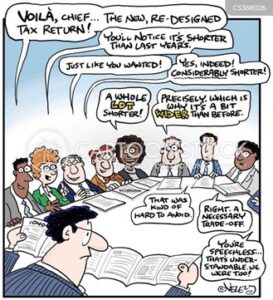
Just when people finally understood §16
2, the IRS said: “Let’s spice things up.”
In 2022, the IRS changed §174 so business owners could no longer immediately deduct R&D costs. You had to amortize them:
- 5 years for U.S. R&D
- 15 years for foreign R&D
This meant a business could spend $100,000 in research… but only deduct $10,000 of it this year.
IRS math:
Spend $100k → deduct $10k → magically look profitable → owe taxes.
Then came the new bill: OBBBACT (2024) – The Tax Relief for American Families and Workers Act.
OBBBACT temporarily restores immediate expensing for U.S.-based R&D.
But foreign R&D? Still amortized for 15 years—like a sad, slow-motion tax documentary.
So… Make It Make Sense (Section 162 + OBBBACT Edition)
Here’s the truth:
- You don’t need profit to owe taxes
- You just need non-deductible expenses under §162
- Or limited R&D deductions under §174
- Or self-employment income over $400
- Or messy books that convert real losses into IRS-approved profits
In plain English:
You can owe taxes while your business is financially crying.
And the punchline?
The IRS will still send the bill with enthusiasm.
A Real Case (Names Changed to Protect Feelings)

A client swore they had a $9,000 loss.
After applying §162 and §174 reality checks:
- 🚫 $3,200 “meals” = personal DoorDash
- 🚫 $1,400 “travel” = Carnival weekend
- 🚫 $2,000 “R&D” = experimenting with new hair products
- 🚫 $1,800 “marketing” = Amazon purchases with zero receipts
Once the nondeductible items were removed:
📉 $9,000 “loss” →
📈 $2,400 taxable profit →
💸 Self-employment tax triggered
Their face said: “How is this legal?”
ACG said: “It’s not you — it’s §162.”
What You Should Do Next

- Get a §162 compliance review – Find out which deductions actually qualify. Not the ones your cousin told you were “definitely deductible.”
- Clean up your bookkeeping – Messy books = nondeductible expenses = higher taxes.
- Understand the new R&D rules – Immediate expensing is back for U.S. research. Foreign research? Not so lucky.
- Plan taxes BEFORE December 31st – Not on April 14th when you’re Googling “How to lower taxes FAST.”
- Let ACG audit your expenses – We’ll show you exactly where money is leaking and where the IRS will strike.

Quick FAQs
❓ If I didn’t profit, why do I owe taxes?
Because §162 and §174 don’t care about your emotions.
❓ Can my child be on payroll?
Is your child actually working… or just adorable?
❓ Are R&D costs fully deductible now?
Only domestic R&D (thanks OBBBACT). Foreign R&D still ages like fine wine — slowly.
❓ What about self-employment tax?
Oh, that one shows up to every party uninvited.